

Enhancing the Hiring Process
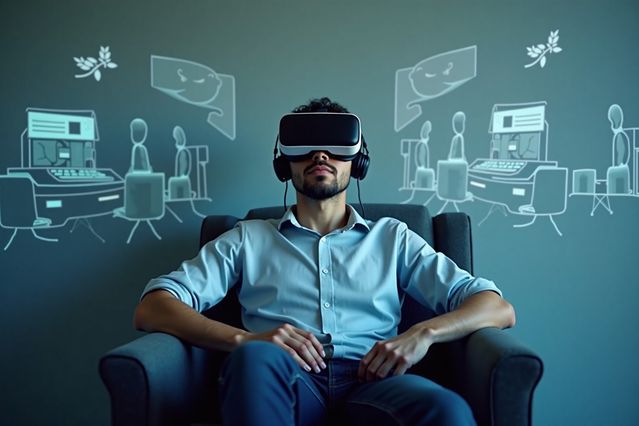
Virtual reality (VR) technology has made significant strides in recent years, and its applications are expanding into various industries. One such industry that is benefitting from VR is recruitment. Virtual reality interviews are transforming the hiring process, providing both candidates and employers with a unique and immersive experience.
Creating a Personalized Experience
Traditional job interviews often lack the ability to truly assess a candidate's skills and fit within a company culture. Virtual reality interviews enable employers to create customized scenarios that simulate real-life work situations. Candidates can showcase their problem-solving abilities, communication skills, and adaptability within a virtual environment. This personalized experience allows employers to make more informed decisions and identify the best candidates for the job.
Breaking Geographical Barriers
One of the challenges in the recruitment process is finding and connecting with suitable candidates who may be located in different cities, countries, or even continents. Virtual reality interviews eliminate geographical barriers by providing a platform for remote interviews. Candidates can participate in interviews from the comfort of their own homes, reducing the need for travel expenses and logistical challenges. This opens up a global talent pool for employers, enabling them to access a wider range of qualified candidates.
Reducing Time and Cost
Traditional face-to-face interviews involve significant time and cost investments. From scheduling and coordinating multiple interviews to arranging travel and accommodation, the process can be time-consuming and expensive. Virtual reality interviews streamline the process by eliminating the need for physical meetings. Employers can conduct multiple interviews in a shorter time frame, reducing the overall recruitment timeline. Furthermore, candidates can save time and money by participating in interviews without the need to travel. This efficiency benefits both candidates and employers, allowing for a faster and more cost-effective hiring process.
Enhancing Candidate Assessment
Assessing a candidate's skills and suitability for a position is crucial in the recruitment process. Virtual reality interviews provide a more comprehensive assessment compared to traditional interviews. Employers can create interactive simulations that test a candidate's technical skills, problem-solving abilities, and decision-making capabilities. This immersive experience allows employers to observe a candidate's behavior and reactions in real-time, providing valuable insights into their potential performance on the job.
Improving Diversity and Inclusion
Virtual reality interviews have the potential to improve diversity and inclusion within the hiring process. Traditional interviews may unintentionally introduce bias based on factors such as appearance, accent, or cultural background. Virtual reality interviews focus solely on a candidate's abilities and qualifications, reducing the impact of unconscious bias. This ensures a fair and objective evaluation of candidates, leading to a more diverse and inclusive workforce.
The Future of Recruitment
As technology continues to advance, virtual reality interviews are poised to become a standard practice in the recruitment process. The benefits of VR interviews, such as personalized experiences, reduced geographical barriers, and enhanced candidate assessment, make them an attractive option for both candidates and employers. Incorporating virtual reality into the hiring process not only improves efficiency but also ensures a more accurate evaluation of candidates' capabilities. The future of recruitment lies in the immersive and transformative power of virtual reality interviews.
Embracing Change
Adopting virtual reality interviews requires a shift in mindset and investment in technology. However, the long-term benefits outweigh the initial costs. By embracing this innovative approach, companies can stay ahead of the competition, attract top talent, and create a more inclusive and diverse workforce. As virtual reality technology continues to evolve, the recruitment process will become more efficient, effective, and engaging.